Dentistry has changed a lot over the past decade. Patients expect more than a filling or a polish; they want to understand what’s happening and feel reassured throughout their visit. Showing people what is going on inside their mouths builds trust in a way that words alone often cannot. That’s why intraoral cameras have become such an essential part of a modern dental surgery.
Two names keep coming up in conversations with dentists across the UK — the Acteon C20 intraoral camera and the Acteon C50 dental camera. Both are trusted, both deliver Full HD images, but they are not quite the same. In this article we’ll look at the Acteon C20 Full HD camera, compare it with the C50, and ask the key question: which of these fits best with the way you practise?
The Acteon C20 – Simple and Reliable
The Acteon C20 has been designed to make daily dentistry easier, not more complicated. It gives a sharp Full HD image, making it simple to spot early decay, cracks, plaque and other issues. The handpiece is light and slim, which makes a big difference if you are holding it for long periods. Patients also tend to relax more when the equipment looks modern and non-threatening.
A couple of clever details make the Acteon C20 specifications worth noting. The ring of LED lights gives consistent brightness, and the anti-fog feature stops the lens misting up. Instead of stopping mid-appointment to wipe the lens, you can keep working. It plugs in via USB, so there is no fuss with installation.
For many surgeries looking to buy Acteon C20 UK, the appeal is clear. It’s affordable, reliable, and doesn’t drown you in settings you’ll never use. It’s perfect for routine hygiene visits, patient consultations and everyday dental care.
Acteon C20 vs Other Intraoral Cameras
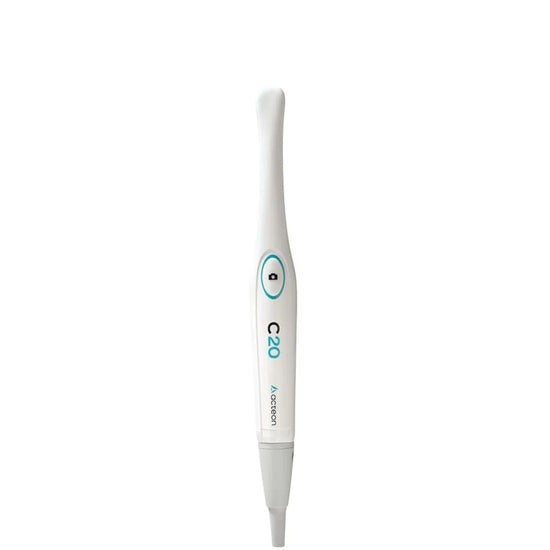
The Acteon C20 Full HD camera avoids those problems. It produces a steady image that you can rely on in front of a patient. For smaller practises that don’t want a steep learning curve, this simplicity is a huge advantage. Staff can pick it up straight away, and patients can see clear pictures without delay.
The Acteon C50 – A Step Up
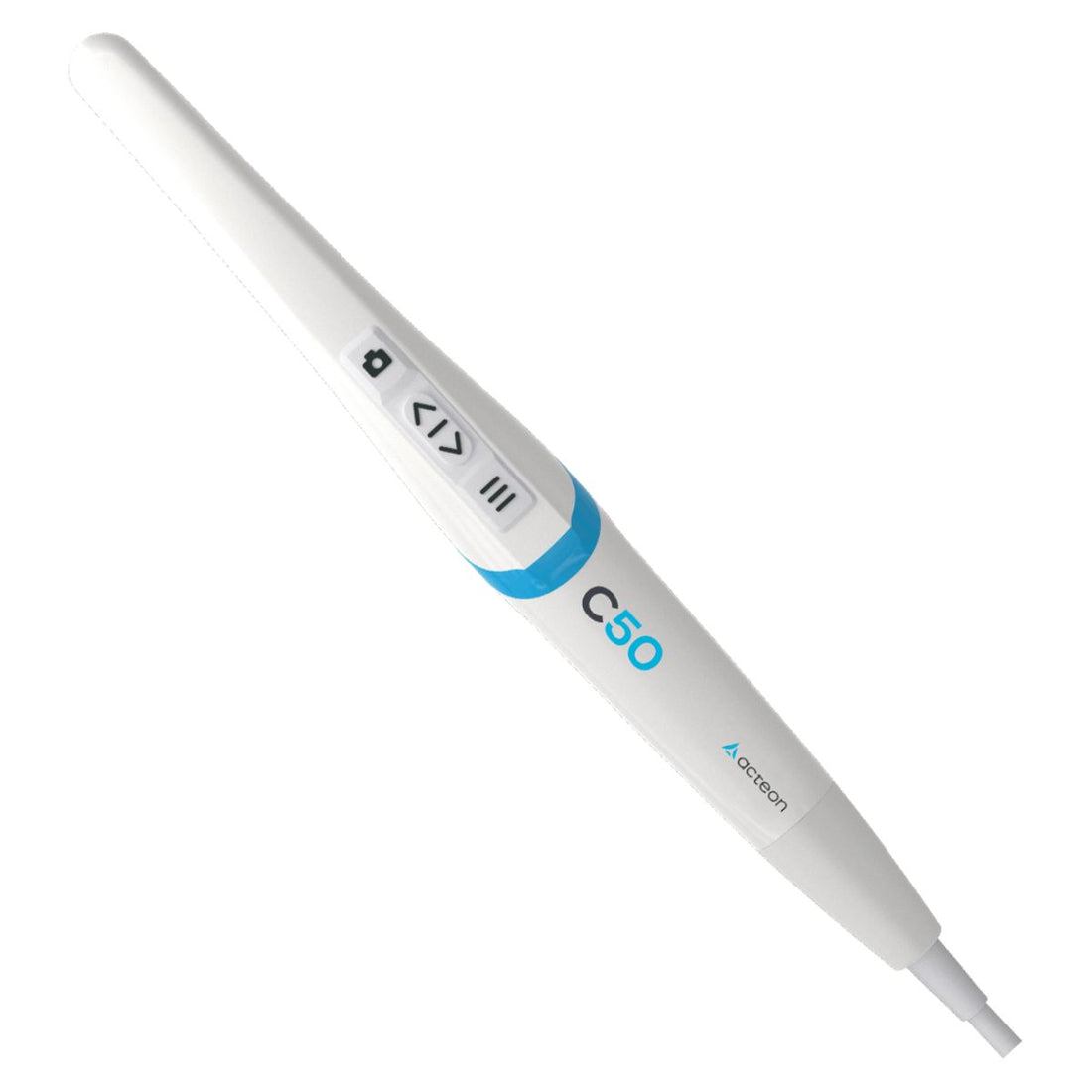
The Acteon C50 intraoral camera is often described as the “premium” version, and with good reason. Like the C20, it gives Full HD clarity, but it adds a whole set of vision modes that make it more versatile.
You can switch between Daylight, Perio, Cario and Macro modes, each one highlighting something specific. Daylight gives a natural colour balance. Perio shows gum health more clearly, making inflammation easier to spot. Cario highlights carious lesions and plaque deposits. Macro lets you zoom right in to reveal tiny cracks or chips.
These aren’t just fancy extras — they can change the way you explain treatment. A patient may nod politely when you talk about decay, but when you show them the problem in Cario mode, they suddenly get it.
Acteon C20 vs C50 – The Real Decision
Choosing between the Acteon C20 vs Acteon C50 is less about which is “better” and more about which suits your style of practise.
If you want a straightforward, dependable camera at a sensible price, the C20 is hard to beat.
If your work involves more complex cases and you want to impress patients with advanced imaging, the C50 may be worth the extra cost.
The Acteon C50 price vs benefit comes down to how often you’ll actually use those additional modes. For a surgery that relies heavily on hygiene and routine consultations, the C20 will do the job perfectly. For a specialist periodontal clinic or a busy city surgery trying to stand out, the C50 makes more sense.
Seeing the Modes in Practise
The extra modes of the C50 really shine in real situations. A hygienist carrying out a routine cheque-up can switch to Perio mode and show a patient the early signs of gum disease. A dentist preparing for restorative work can use Macro mode to point out a crack in a crown. In a competitive urban practise, showing decay through Cario mode helps patients understand why treatment is urgent.
This isn’t just about the image itself — it’s about communication. Patients are far more likely to trust what they see with their own eyes than a description alone.
Everyday Scenarios
To make the choice clearer, here are some examples:
A small-town practise: the C20 is enough for routine hygiene and consultations.
A specialist perio practise: the C50’s extra modes make it invaluable for monitoring and explaining complex cases.
A busy city practise: while the C20 works well, the C50 helps the surgery stand out with its advanced features.
A teaching practise: the C50 gives tutors more to demonstrate, showing different conditions under different lighting modes.
Price and Long-Term Value
The C20 is naturally the more affordable option, which is why so many surgeries start with it. It covers the essentials without draining the budget.
The C50 does cost more, but many dentists argue it pays for itself by improving patient understanding and increasing case acceptance. Over time, that can make a noticeable difference to the success of a practise.
Where to Buy
If you’re asking where to buy, one of the safest options is Qudent. They stock both the C20 and C50, offer warranties, and provide after-sales support. For dentists who want reliability not only in the product but also in the supplier, Qudent is a sensible choice.
Final Thoughts
Both the Acteon C20 for dental practise and the Acteon C50 dental camera are excellent tools.
The C20 is simple, reliable and affordable — the perfect fit for general practises.
The C50 is advanced, flexible, and designed for surgeries that want to deliver more detail and enhance patient communication.
Comments
Post a Comment